- Two weeks of mapping before anything is built, ending in three to five ranked workflows.
- Build on the tools you already pay for, then pilot with your own people on real work.
- You own everything at the end; ongoing care is optional.
Ask a business owner how their AI project is going and you will usually hear one of two things. “We are still exploring.” Or “We tried a few tools and nothing really changed.” Both come from the same problem: there was no plan with an end.
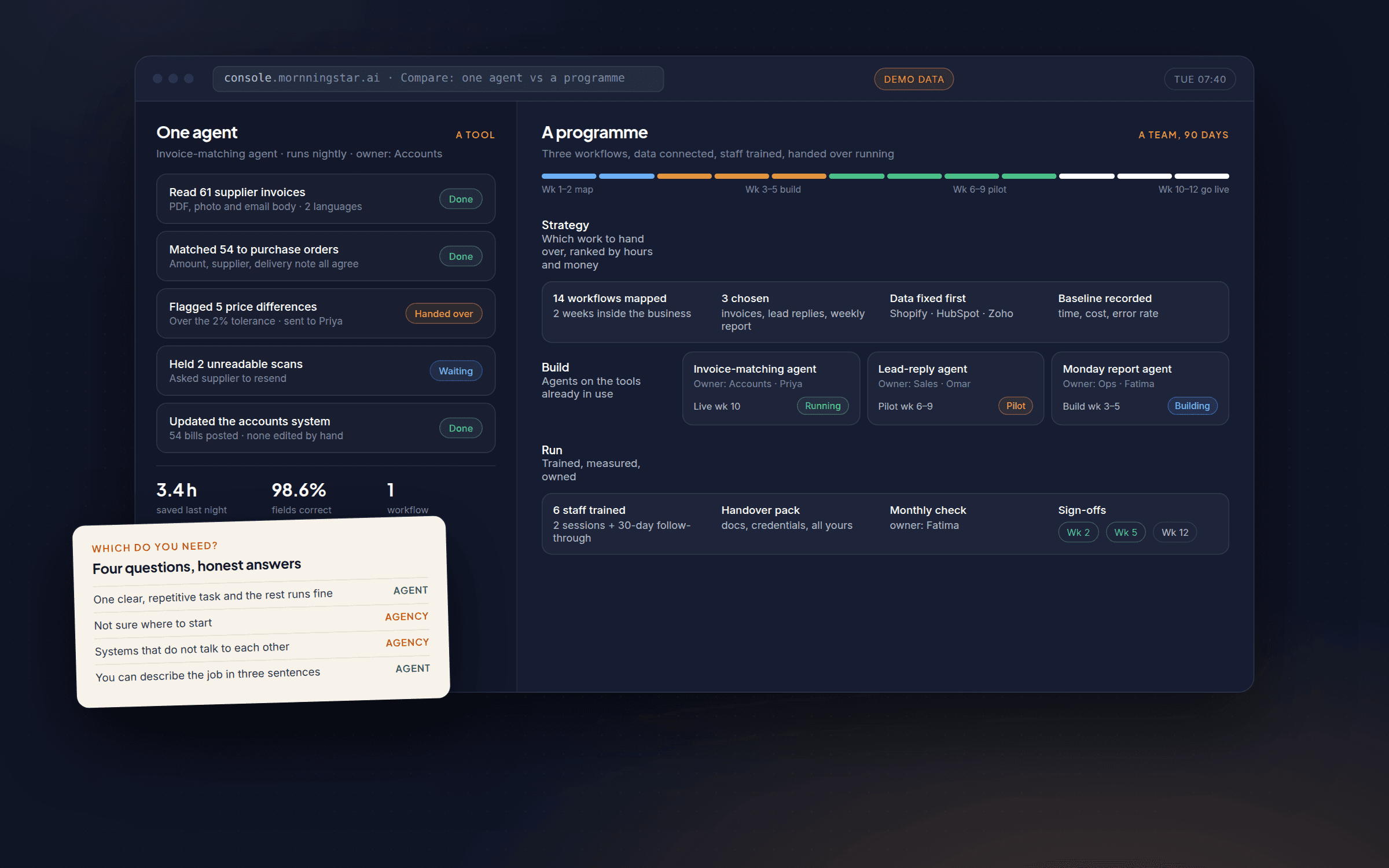
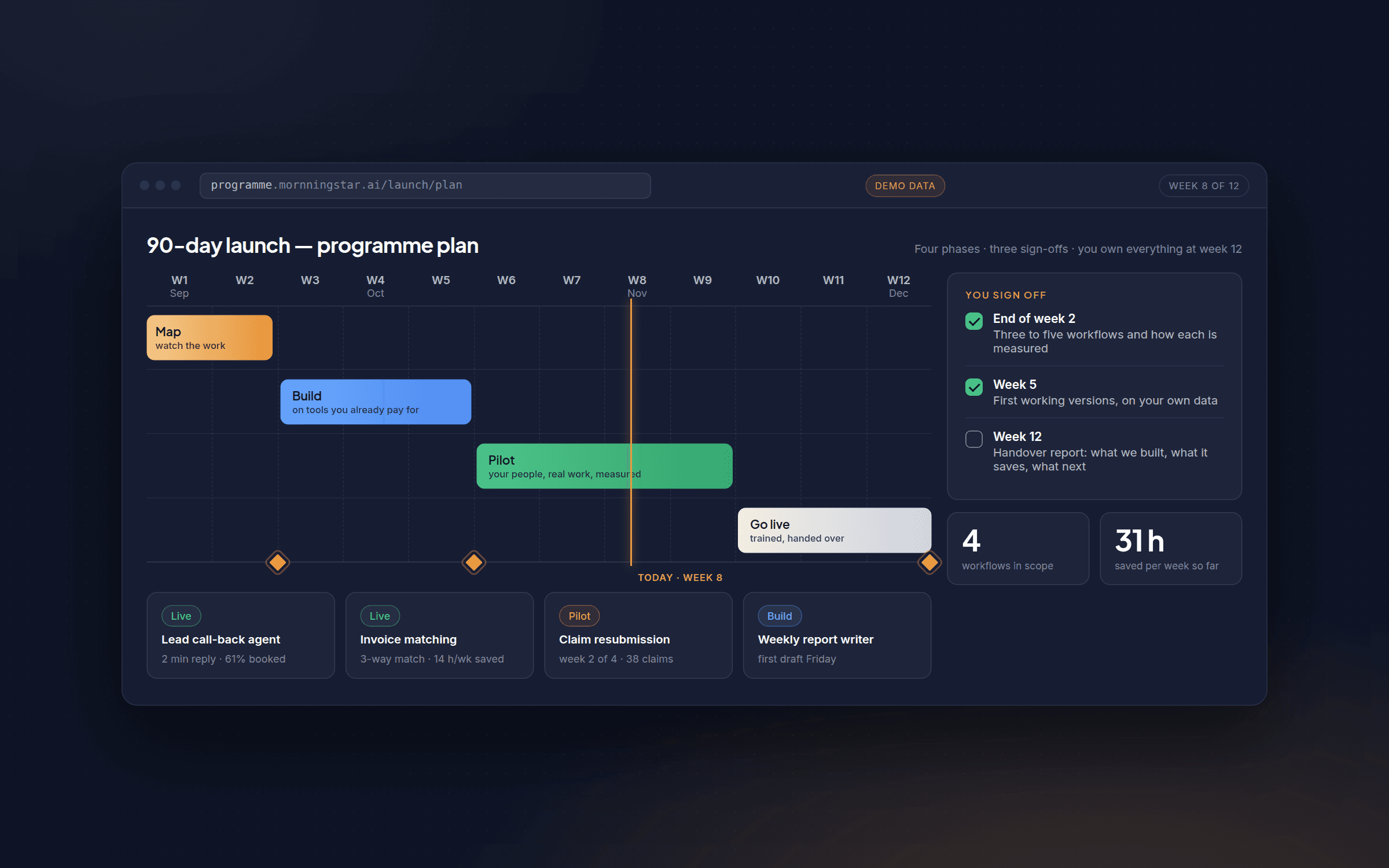
We run AI work as a 90-day programme because 90 days is long enough to change how a business runs and short enough that everyone stays interested. Here is what happens.
Weeks 1 and 2: we map the work
We do not start with tools. We start by watching how work gets done. We talk to the people doing it, get read-only access to the systems, and follow a few real tasks from start to finish. An order. A claim. A lead. A month-end report.
By the end of week two you have a list of workflows, ranked by how many hours they eat and how much money leaks through them. We pick three to five. Not ten.
Three to five things done properly beat ten things half done.
Weeks 3 to 5: we build
This is where the agents and automations get built and connected to your CRM, your shop, your accounts. We use the tools you already pay for wherever possible. You see working versions early, while they are still cheap to change. If a workflow turns out to be harder than it looked, we say so now and swap it for the next one on the list.
Weeks 6 to 9: we pilot
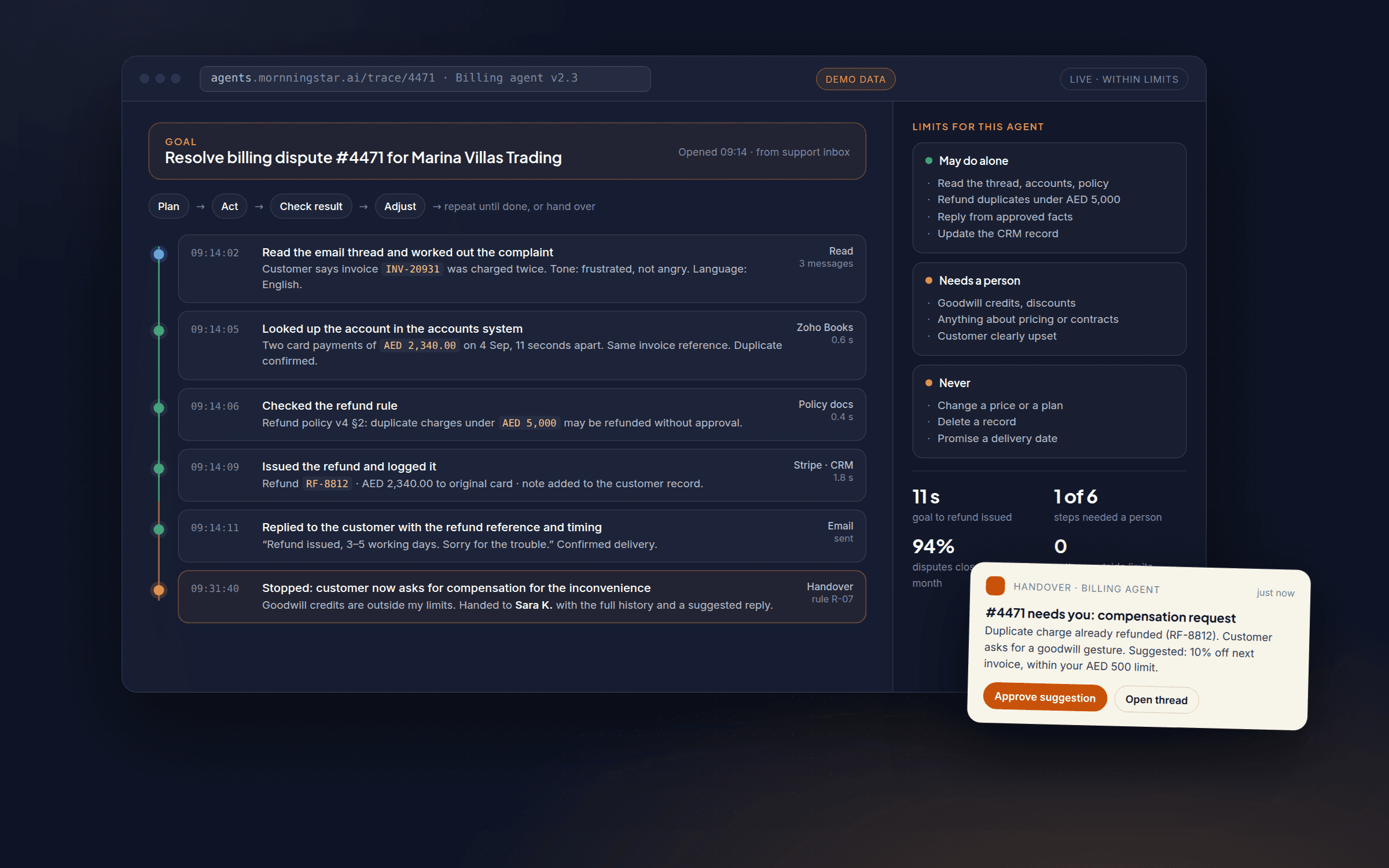
A small group from your team runs the new workflows on real work, with us watching. We measure the things that matter: how long a task takes now versus before, how many errors, how often the agent has to hand over to a person. Then we tune. This is the phase most projects skip, and it is the phase that decides whether anything sticks.
Weeks 10 to 12: we go live
Everyone who touches the work gets trained on it. The workflows are hardened, documented and handed over. You get a short, honest report: what we built, what it saves, and what we would do next.
After: care
Businesses change. Suppliers change, systems update, a new product launches. Some clients keep us on for a few hours a month to keep things running and add new workflows. Others run it themselves. Both are fine, because you own everything.
What this is not
It is not a strategy deck. It is not a platform you have to buy. And it is not a promise that AI will transform your business. It is three to five specific pieces of work that used to take people hours and now do not. That is usually enough to change the numbers, and it is always enough to know what to do next.

Leads every 90-day programme personally. Writes these notes from the projects that shipped and the ones that did not, so you can skip the second kind.