- GPT-6 (OpenAI, 7 October), Claude Haiku 5.5 (Anthropic, 7 October), Gemini 4 Argon (Google, announced 30 September, wider access 13 October) and Muse Wonder (Meta, 12 October) all arrived within two weeks.
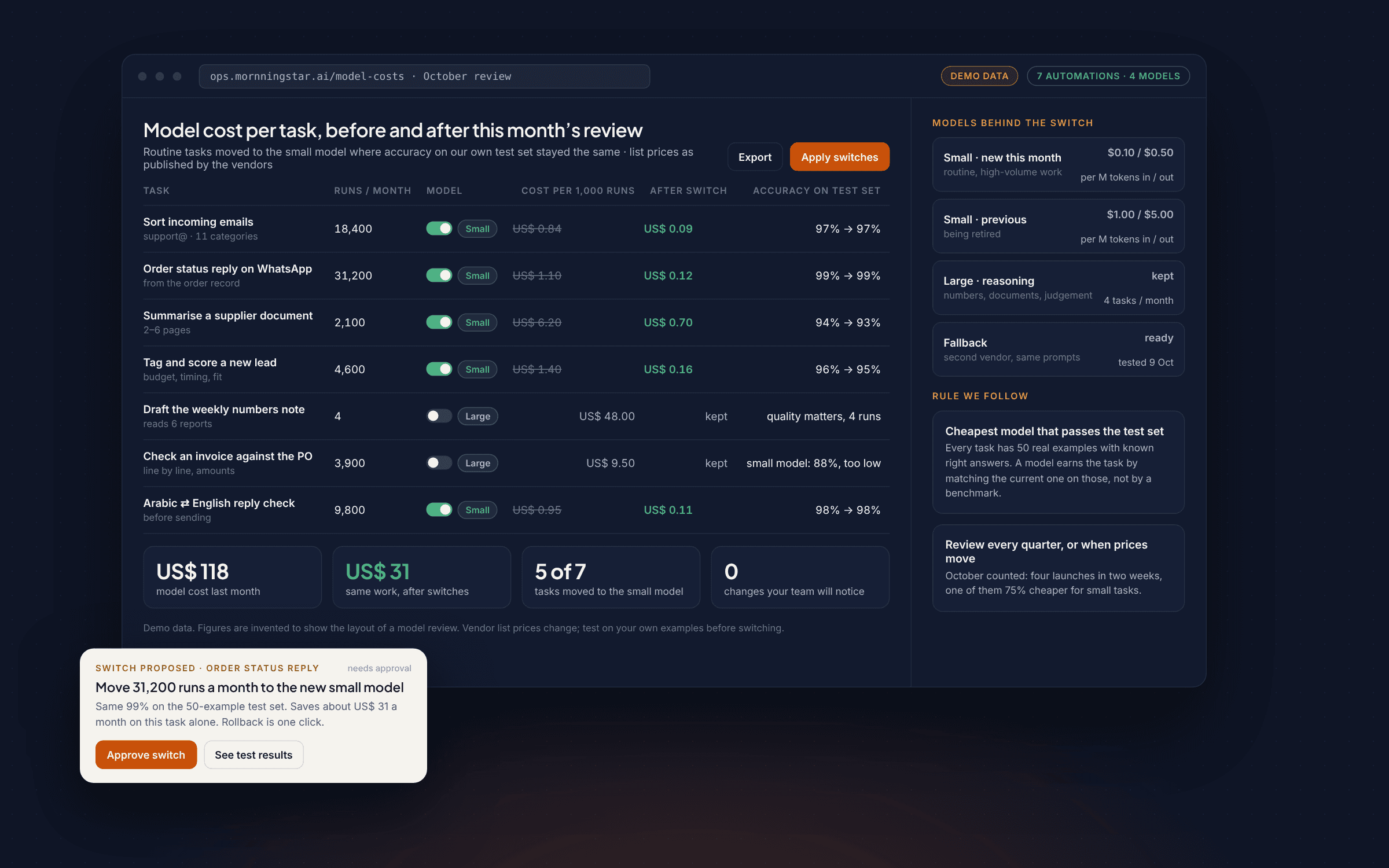
- The one with a direct effect on your bills is Haiku 5.5: Anthropic says it costs about 75% less to run than the model it replaces, for the high-volume work most business automations are made of.
- The benchmark claims all come from the companies themselves. None of them change the questions to ask before you buy, and a good build swaps models underneath without you noticing.
If you follow AI news at all, the first two weeks of October were loud. Four of the biggest AI companies released new flagship models within days of each other. If you run a business, the useful question is not “which is best?” It is “does this change anything I am doing or paying for?” Mostly no, with one exception worth knowing about.
What was released, in one line each
- GPT-6 (OpenAI, 7 October). Now the default in ChatGPT for paying plans (Plus, Pro, Business, Enterprise). Despite early reports, free and Go users do not get GPT-6; OpenAI’s own help page says they stay on the previous generation. A new “Intelligent UI” can add small interactive elements to answers.
- Claude Haiku 5.5 (Anthropic, 7 October). Anthropic’s smallest and cheapest model, built for high-volume jobs: sorting, summarising, classifying, answering routine questions. It is the one with the price change below.
- Gemini 4 Argon (Google, announced 30 September). Google released it first to a small group of cyber-security defenders, then to paid developers and top-tier subscribers from 13 October. Google’s headline is long, complex tasks and much longer outputs.
- Muse Wonder and Muse Wonder Full (Meta, 12 October). Meta’s first models it calls “frontier”, aimed at agent work and memory. Wonder is available to developers; Wonder Full only through Meta’s own coding product.
Every performance comparison in the launch posts was produced by the company that made the model. Treat them as marketing until an independent test says otherwise.
The one that changes your costs
Most business automations do not need the most capable model. Reading an email and deciding where it goes, pulling an order status, drafting a WhatsApp reply from a template, summarising a document: this is small-model work, and it runs thousands of times a day.
Anthropic’s published prices for Haiku 5.5 are US$0.10 per million tokens of input and US$0.50 per million tokens of output for normal-length requests (a million tokens is roughly 750,000 words), against US$1.00 and US$5.00 for the model before it. Anthropic says that works out to about 75% cheaper on average once you account for the new model using slightly more tokens per task. That is the vendor’s own arithmetic, but the list prices are public, and the direction is clear: the routine layer of AI automation got much cheaper this month.
What does not change
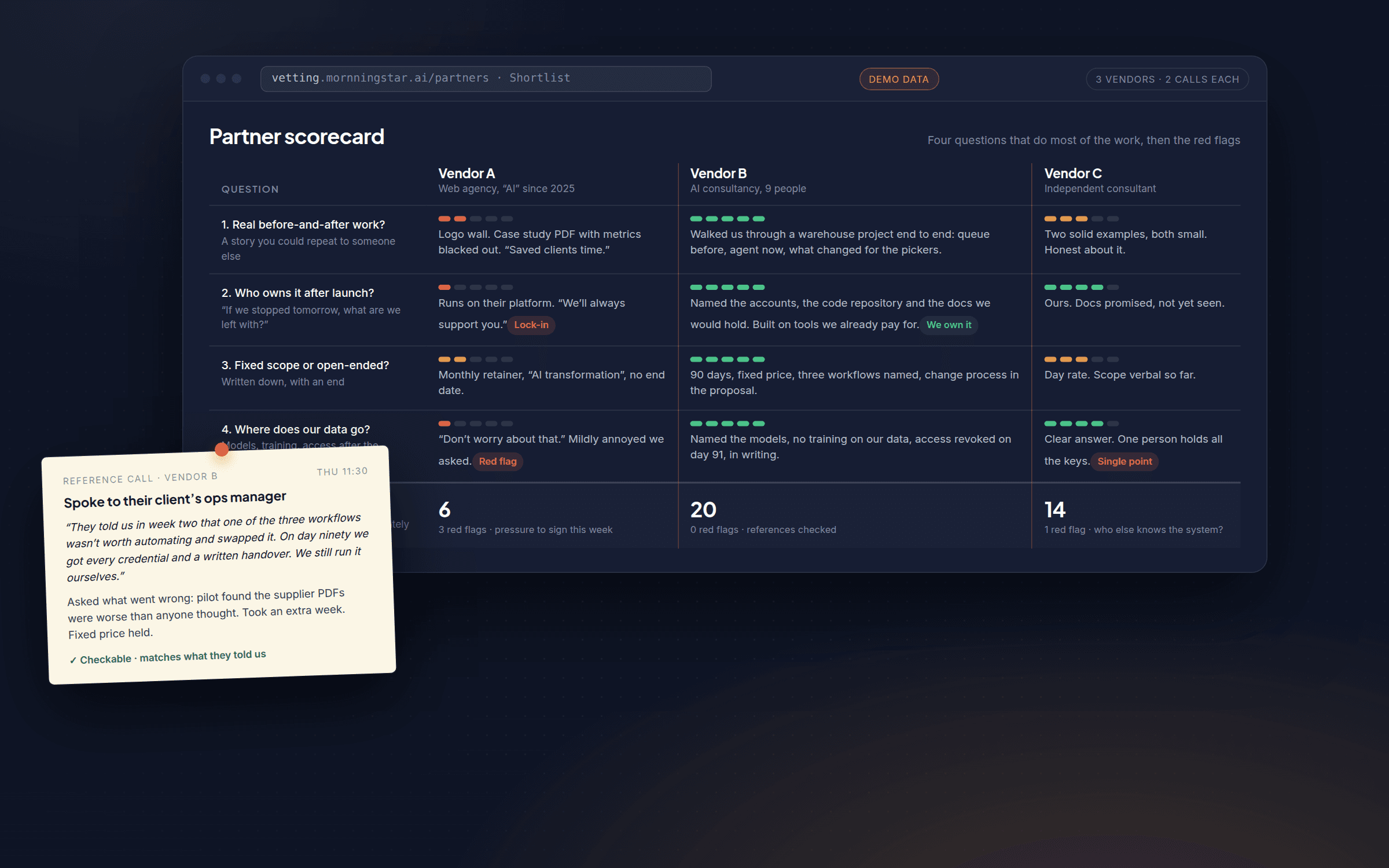
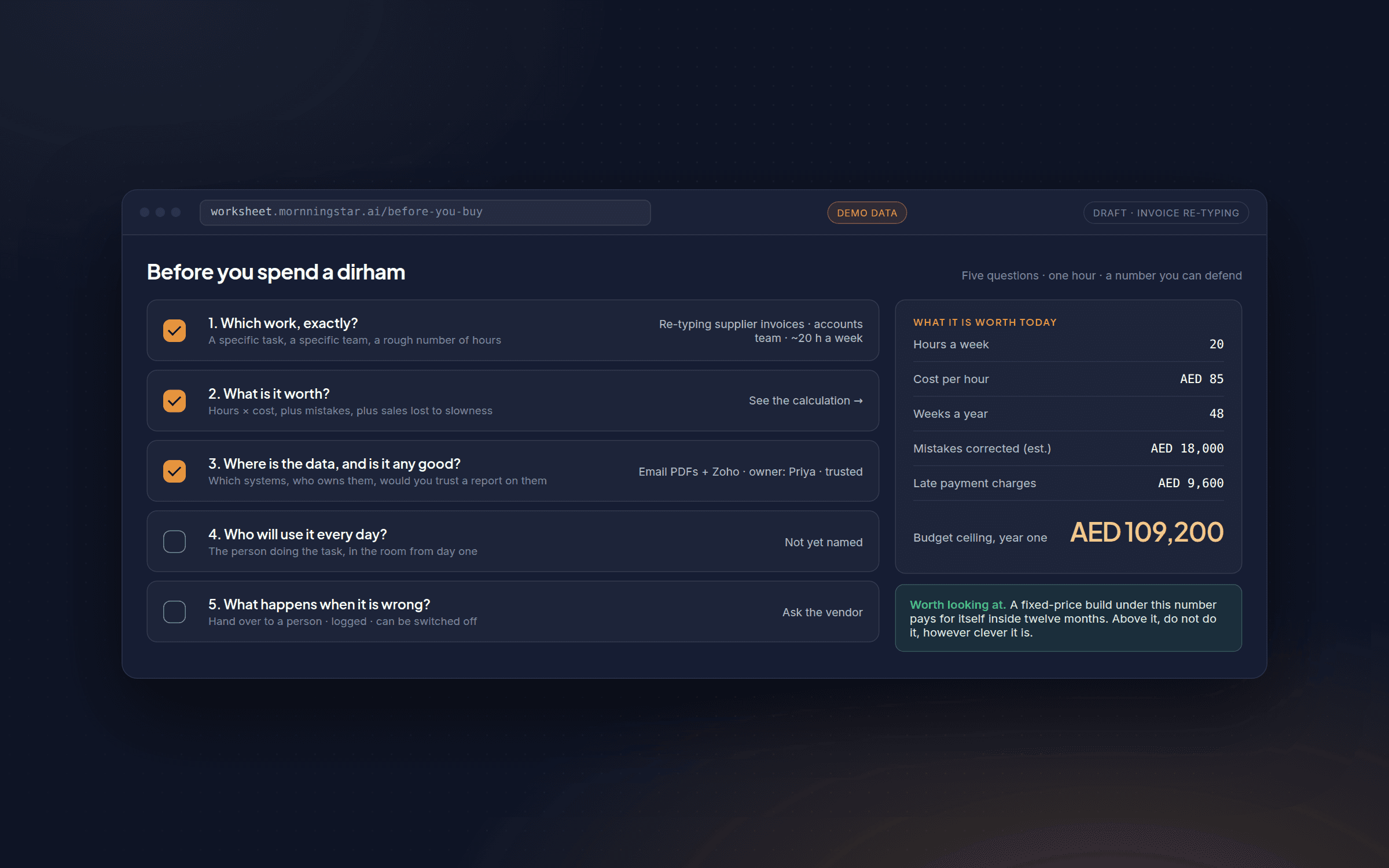
- The questions to ask before you buy. Still the same five: what problem, what data, who owns it, what it costs to run, how you will know it worked. See five questions before you spend a dirham on AI.
- Where the real work is. Connecting the model to your systems and cleaning your data is still most of a project. A better model does not fix a spreadsheet with three versions of the same customer. See is your data ready for AI.
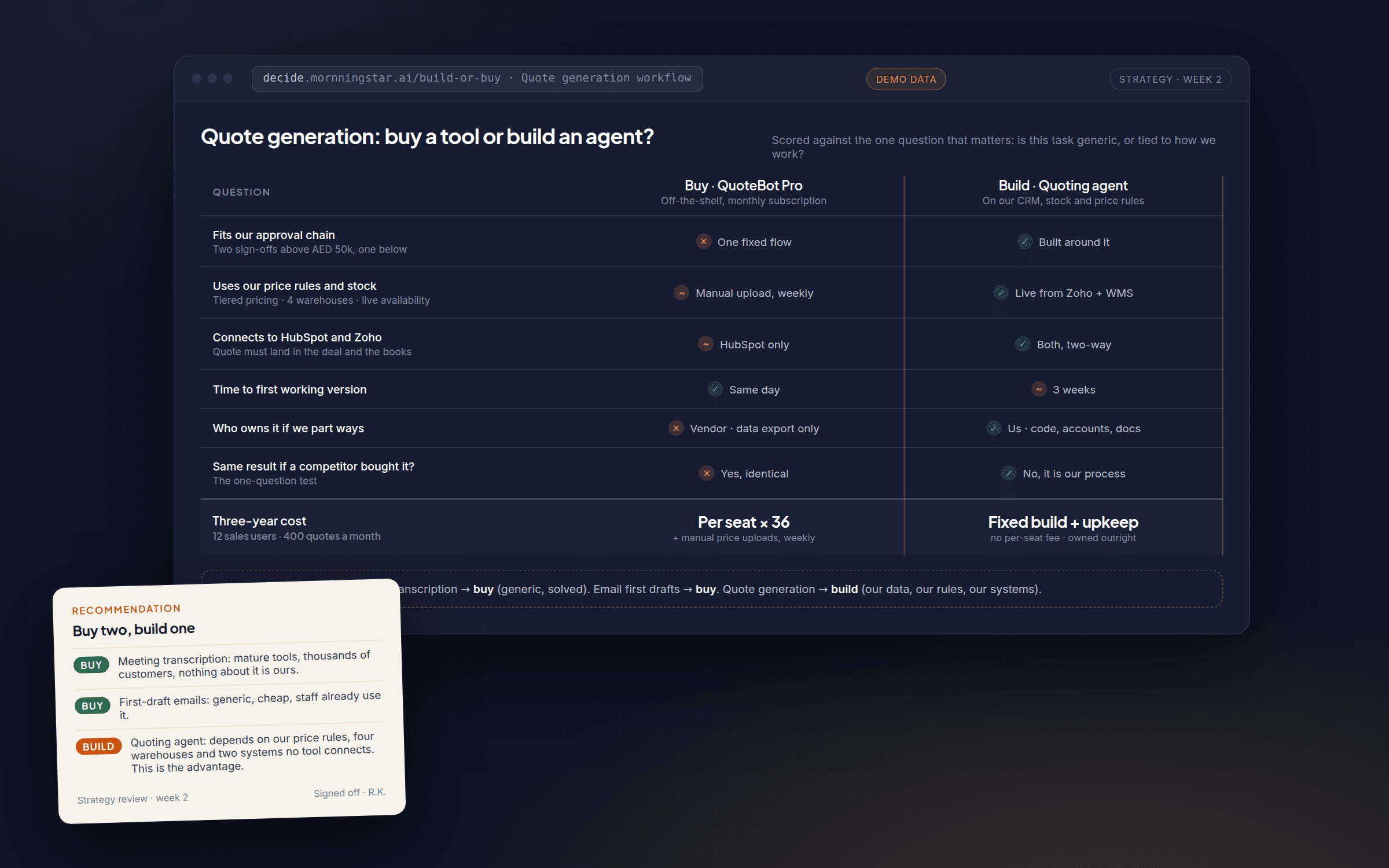
- Who should pick the model. Not you. A well-built automation keeps the model behind a switch, so your team can move from one to another in an afternoon when prices or quality change, as they did this month. If your vendor has tied you to one provider, ask why.
A note on Google and Meta
Google’s staged release (security specialists first, then paid customers) is a sign of how these companies now handle their most capable models: slowly, with government early-access reviews. Meta’s entry matters mainly because Meta also runs WhatsApp and the ads platforms many of our clients depend on; expect its models to turn up inside those products before you can buy them separately.
Where to start
Do not re-plan anything because of a launch week. Do ask one question of whoever runs your AI: “which model are we on, what does it cost per task, and when did we last check?” If nobody can answer, that is the project. Our strategy work usually starts there.
Questions
Should we switch to GPT-6 for our business?
Is the cheapest model good enough?
Do these launches affect data privacy?
How often will this happen?
Sources
- Anthropic, Introducing Claude Haiku 5.5, 7 October 2026 (prices and the 75% figure).
- OpenAI Help Centre, GPT-6 and other models in ChatGPT, read 21 October 2026 (which plans get GPT-6).
- Google, Gemini 4 Argon announcement, 30 September 2026, and the Gemini API changelog entry of 13 October 2026.
- TechCrunch, Meta releases its first frontier model, Muse Wonder, 12 October 2026.

Leads every 90-day programme personally. Writes these notes from the projects that shipped and the ones that did not, so you can skip the second kind.