- Name the exact task, team and hours before you buy anything.
- Your budget ceiling is what the task costs you today in hours, mistakes and lost sales.
- Check the data, the daily user and what happens when the AI is wrong.
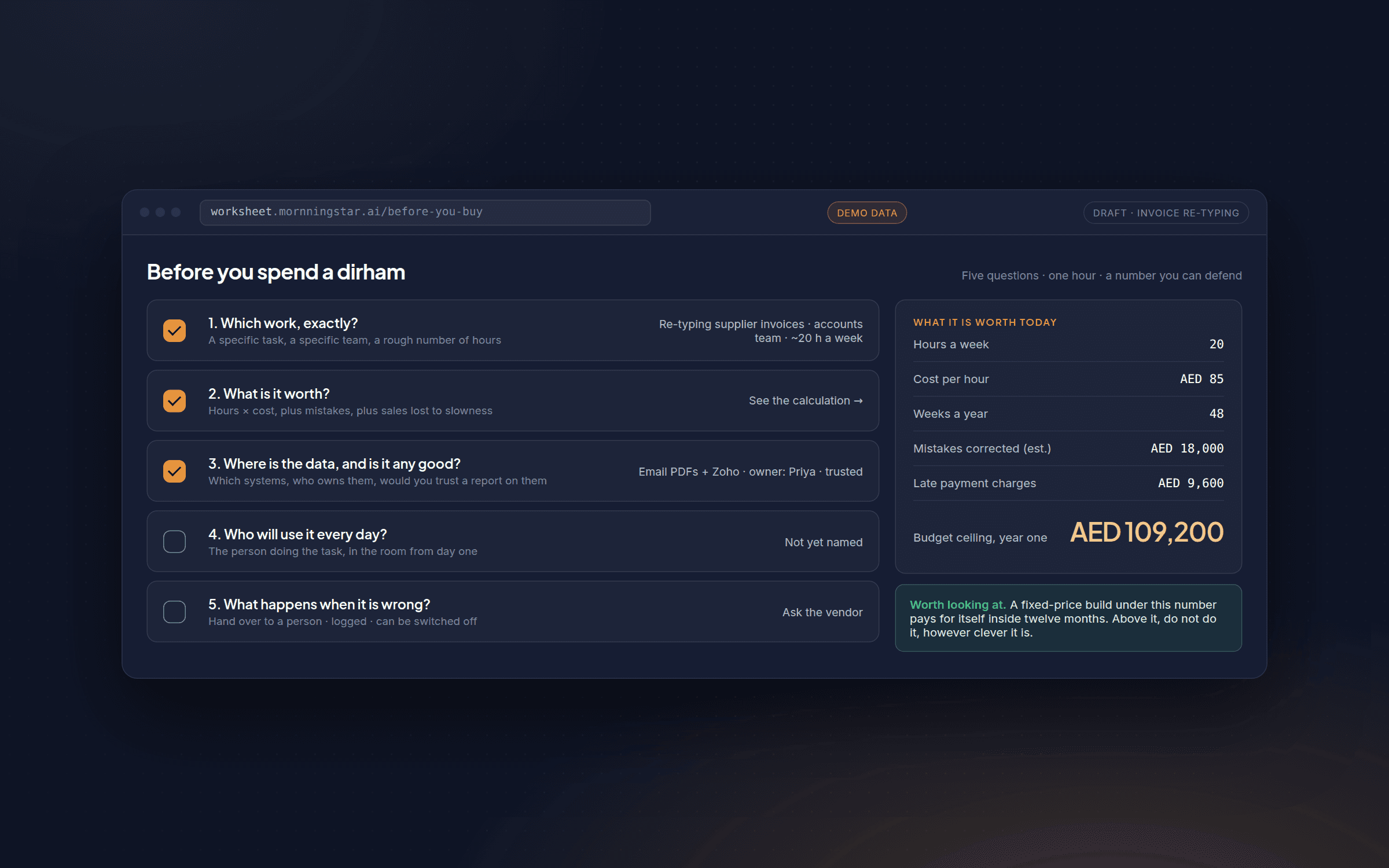
We spend a lot of time with owners who bought an AI tool, or hired someone to build one, and cannot say what it did for the business. Almost every time, the same five questions were never asked. Ask them before you spend anything.
1. Which work, exactly?
“We want to use AI in operations” is not an answer. “Our team spends 20 hours a week re-typing supplier invoices” is. If you cannot point at a specific task, a specific team and a rough number of hours, you are not ready to buy. You are ready to look, and looking is cheap.
2. What is it worth?
Take the hours, multiply by what those people cost. Add the cost of the mistakes the task produces. Add the sales lost because it is slow. That is your budget ceiling. If a solution costs more than it saves in a year, do not do it, however clever it is.
3. Where is the data, and is it any good?
AI reads data. If your data is in six systems that disagree, the AI will be confidently wrong. Ask: where does the information for this task live today, who owns it, and would you trust a report built on it? Often the first job is not AI at all. It is connecting and cleaning what you have.
4. Who will use it every day?
Not the owner. The person doing the task. If they were not in the room when it was designed, they will not use it, and you will be back where you started with a licence fee. Bring them in on day one.
5. What happens when it is wrong?
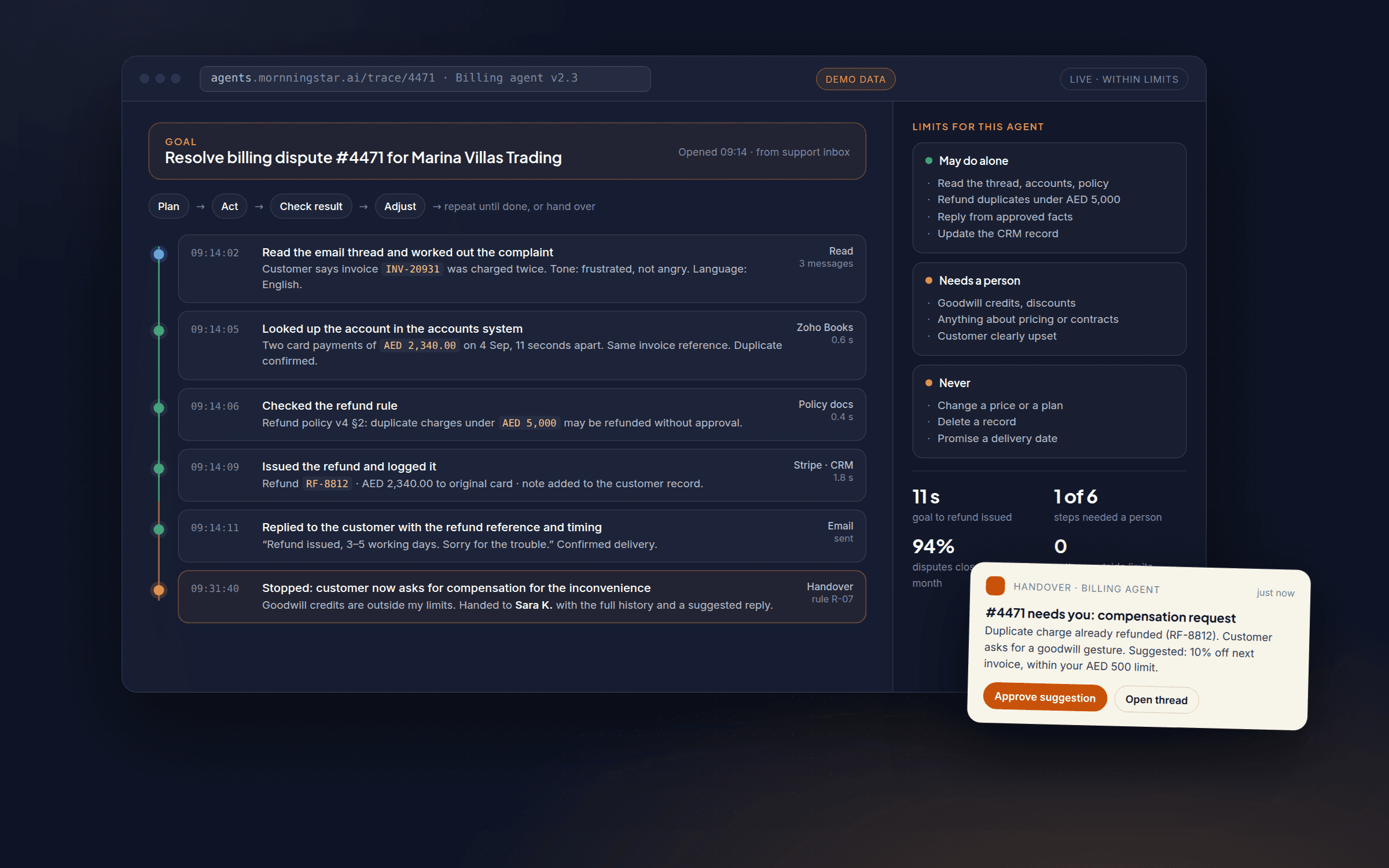
Every AI system is wrong sometimes. The question is what happens then. Does it hand over to a person? Is the mistake logged so you can see it? Can you switch it off? Anyone selling you AI should answer these in one sentence each. If they cannot, that is your answer.
What good looks like
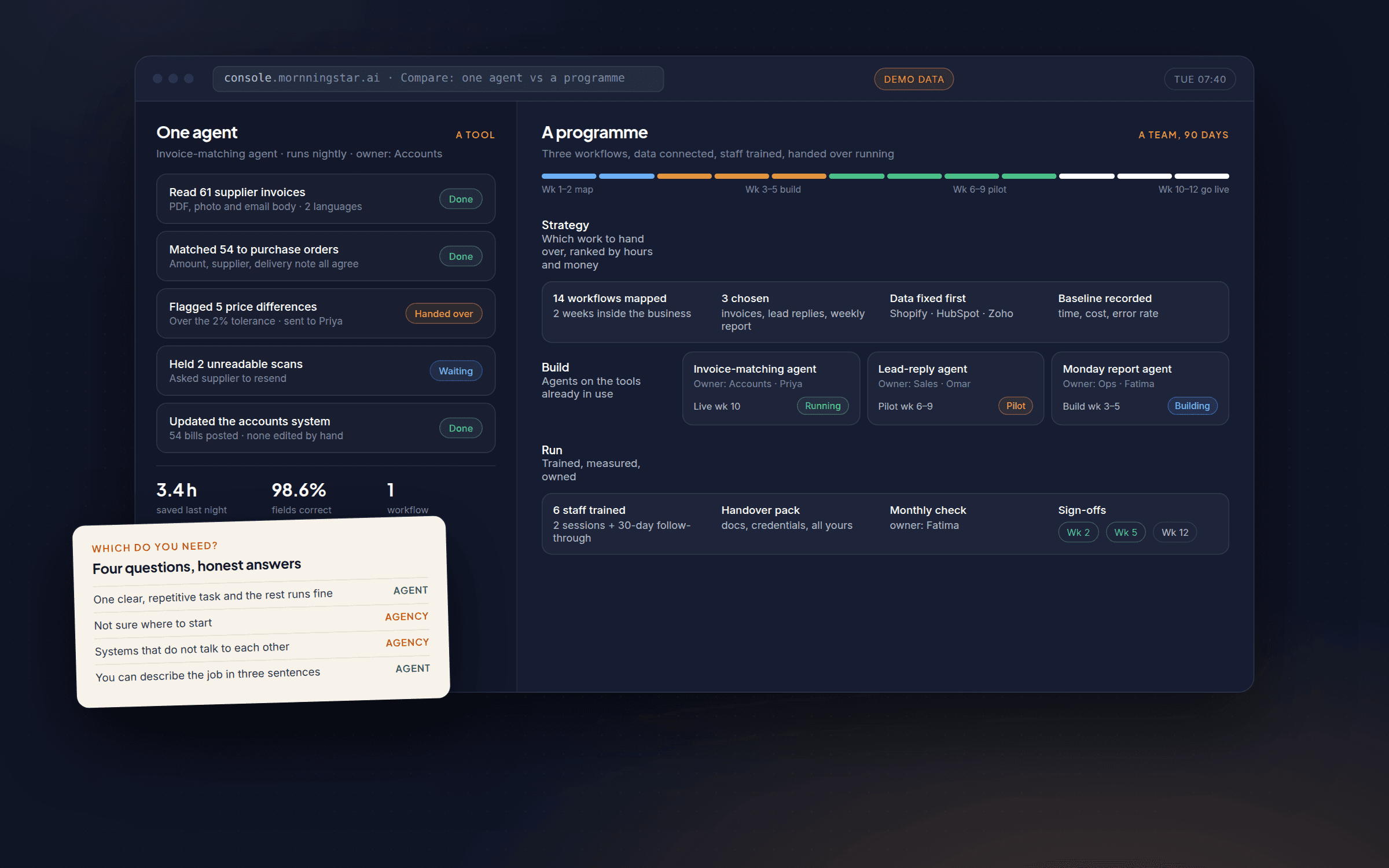
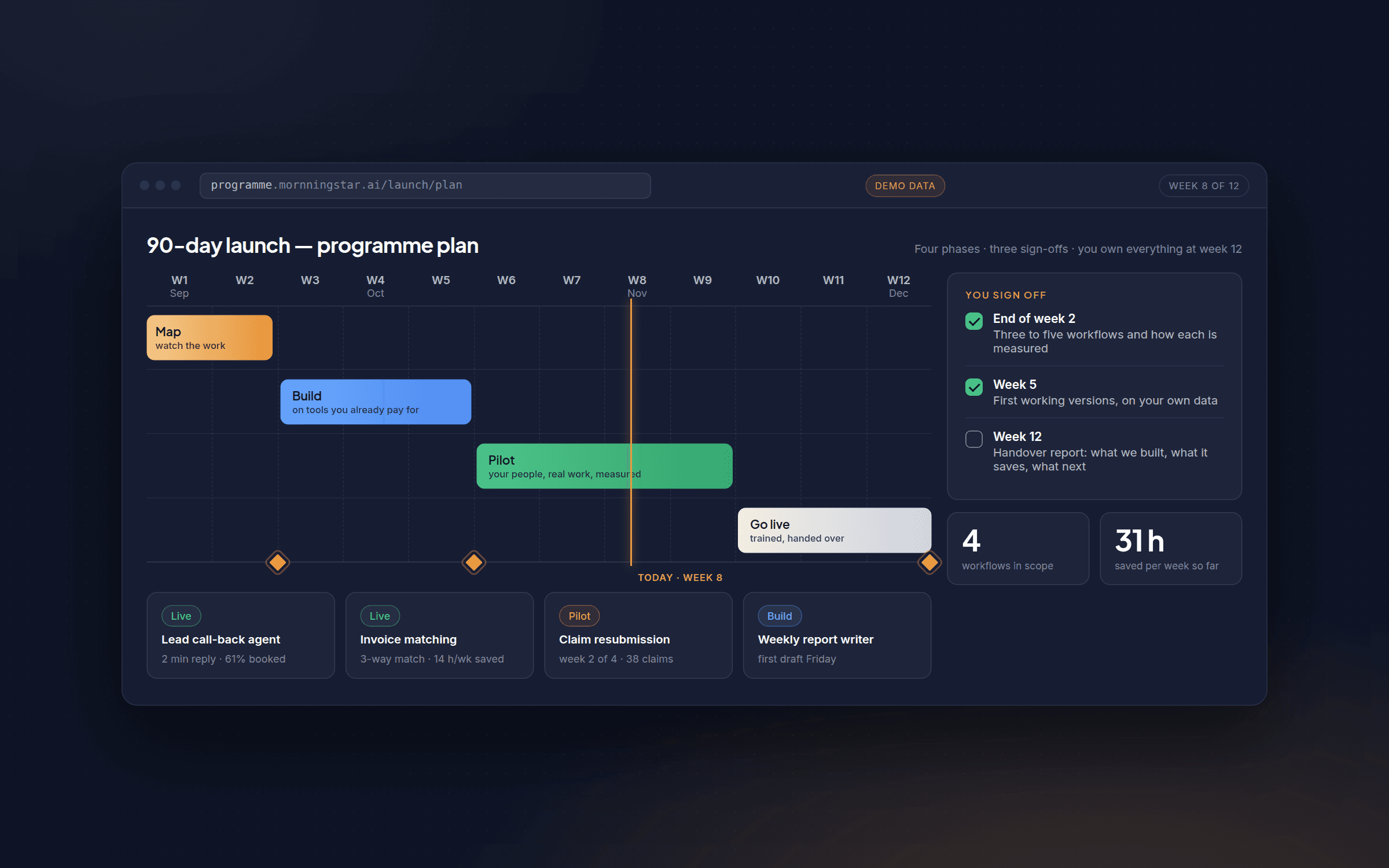
A good first AI project is small, specific, measured and owned. It saves a known number of hours in a known team, using data you trust, with a person in the loop for the hard cases. Do one of those. Then do the next one. That is how businesses actually get good at this.

Leads every 90-day programme personally. Writes these notes from the projects that shipped and the ones that did not, so you can skip the second kind.