- WhatsApp suits a first agent because it is already the default channel in the UAE and India, most messages follow a few patterns, and nobody expects an instant human reply.
- It handles order status, stock and hours questions, bookings and reminders, and first-pass lead qualification well. Complaints, ambiguous requests and high-stakes decisions go to a person.
- It needs the WhatsApp Business Platform, not the free app: a verified business, approved templates for messages you start, and a per-message cost. Since 1 October 2026 replies inside the 24-hour window are free only up to 1,000 a month per number.
If you run a business in Dubai, Hyderabad or almost anywhere in the UAE or India, your customers are already messaging you on WhatsApp, whether you set that up on purpose or not. Order questions, appointment times, follow-ups on quotes, all sent through the app they already have open. That habit is why a WhatsApp agent is one of the more practical places to start with AI, rather than one of the more experimental ones. You are not asking customers to learn a new tool. You are putting an assistant where they already are.
Why WhatsApp usually comes first
Most businesses exploring agents ask the same question: where do we point this first? Email, a website chat widget, an internal tool? WhatsApp tends to win for four concrete reasons.
- It is already the default channel. In the UAE and India especially, WhatsApp is how customers expect to reach a business, not an alternative to phone or email.
- The conversations repeat. “Where is my order”, “what are your hours”, “can I book a slot”. A large share of messages follows a small number of patterns, which is exactly the work an agent handles reliably.
- Nobody expects an instant human reply. That makes it a lower-pressure place to introduce automation: the agent answers immediately, a person catches up later if needed.
- It scales without headcount. A small team can only answer so many messages in office hours. An agent covers evenings, weekends and busy periods.
None of this makes WhatsApp automation right for every business. But if customers already message you there and your team spends real time on repetitive replies, it is a sensible place to start. For the wider list of what agents suit and what they do not, see five jobs for an AI agent.
What it handles well
A well-scoped set of tasks, not everything a human rep does.
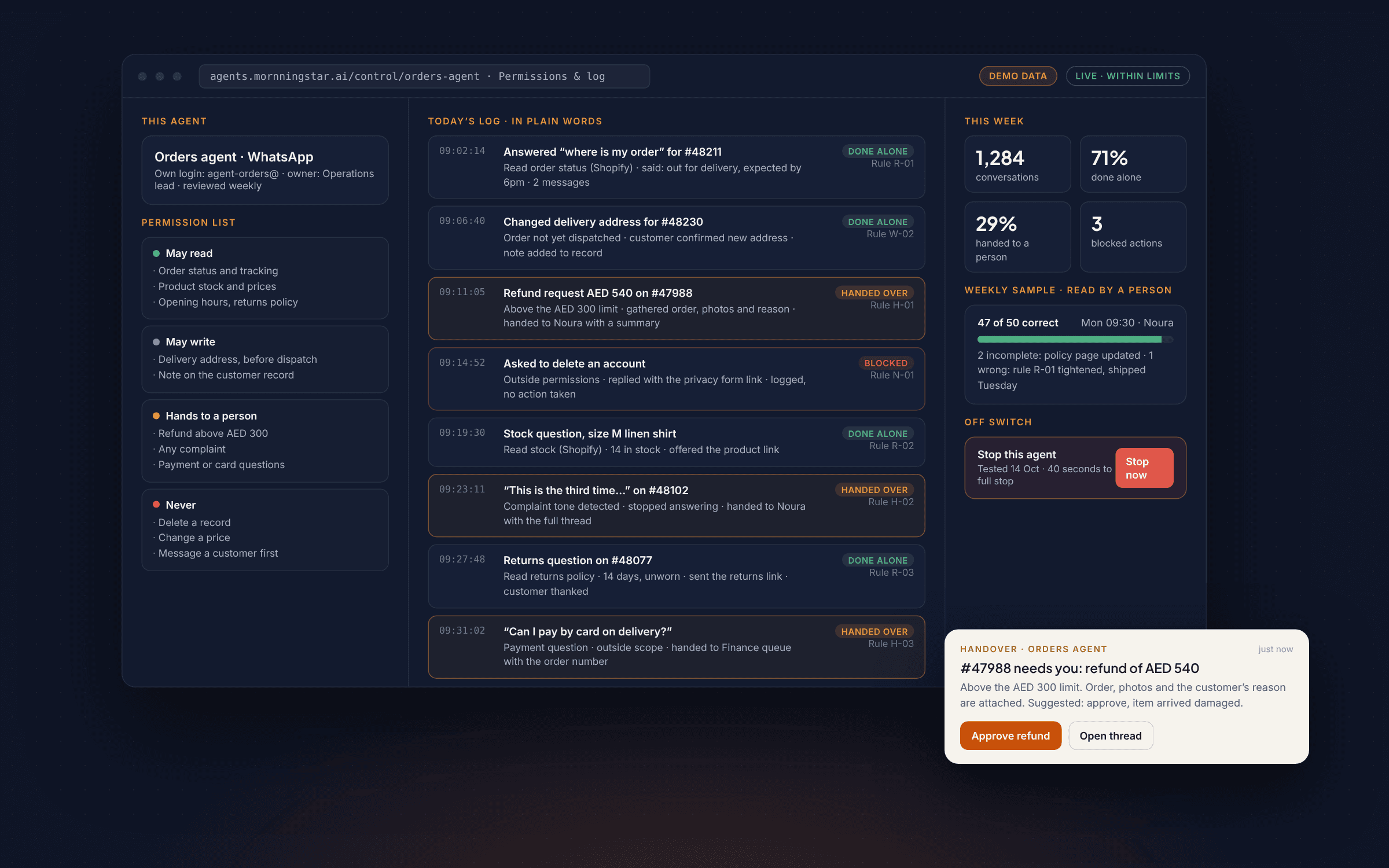
Order status and common questions
The most common and most reliable use. A customer asks where their order is, whether an item is in stock, what the returns policy says, what time you close. An agent connected to your order system or catalogue answers instantly with real data instead of a canned line. For a retail or online business this alone absorbs a meaningful share of daily messages: the questions that do not need a person but do need an accurate, specific answer.
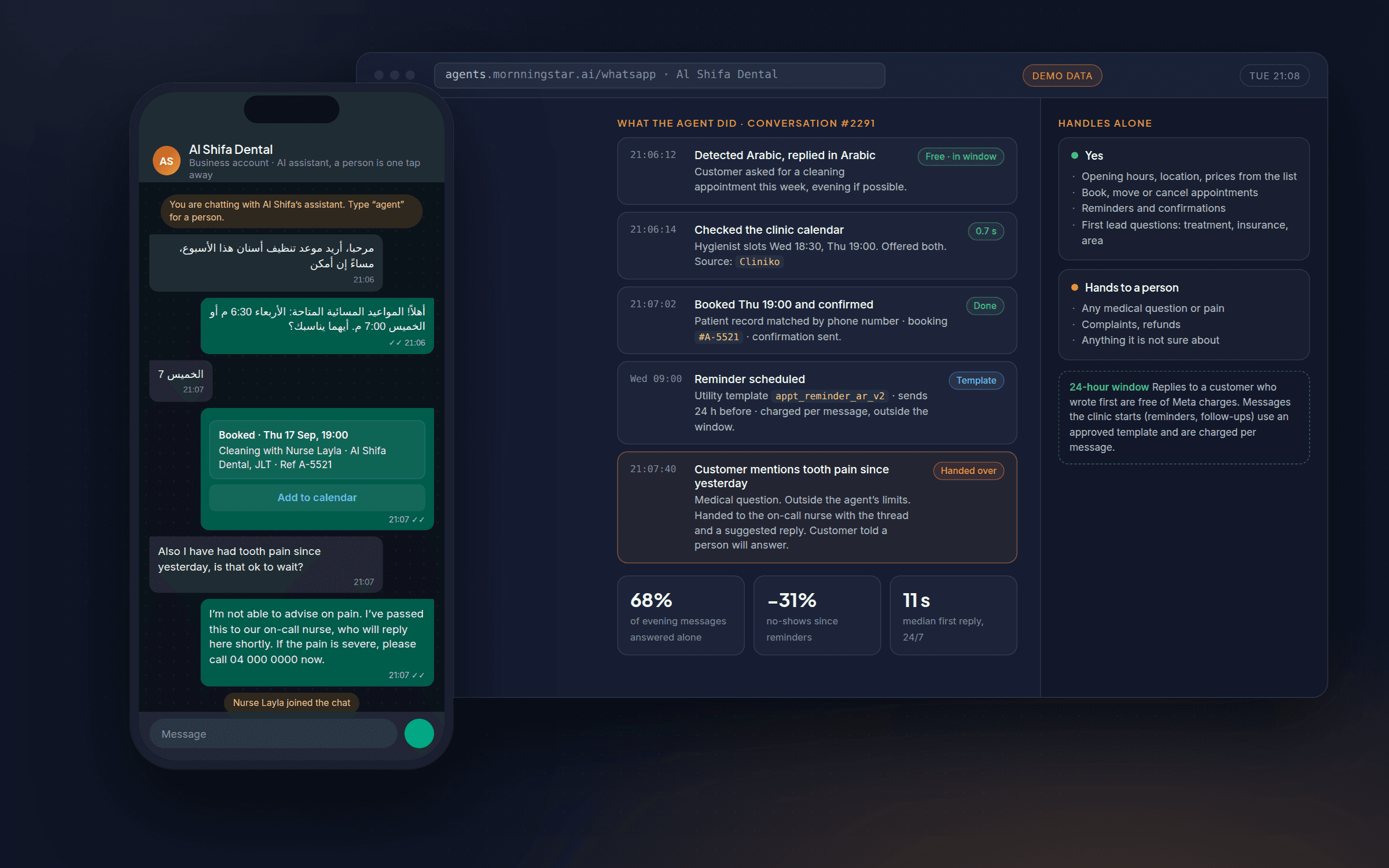
Bookings and reminders
Salons, clinics, property viewings, service calls, consultations: anything with a calendar behind it. The agent checks availability, offers slots, confirms, and sends a reminder before the appointment, all in the thread the customer already used. Reminders on WhatsApp get read, which quietly cuts no-shows.
Lead qualification
Before a sales conversation reaches a person, the agent asks the handful of questions that decide whether a lead deserves a call: budget, timeline, location, what they are looking for. It then hands a summary to the right salesperson or writes it into the CRM. A lead who messages at 11pm and gets an immediate, relevant reply is far more likely to stay warm than one who waits until morning.
In all three, the pattern is the same: the agent handles the predictable, rules-based part of the conversation, consistently, at any hour, without tiring of the hundredth identical question.
Where it still needs a person
This is the part vendor pitches leave out.
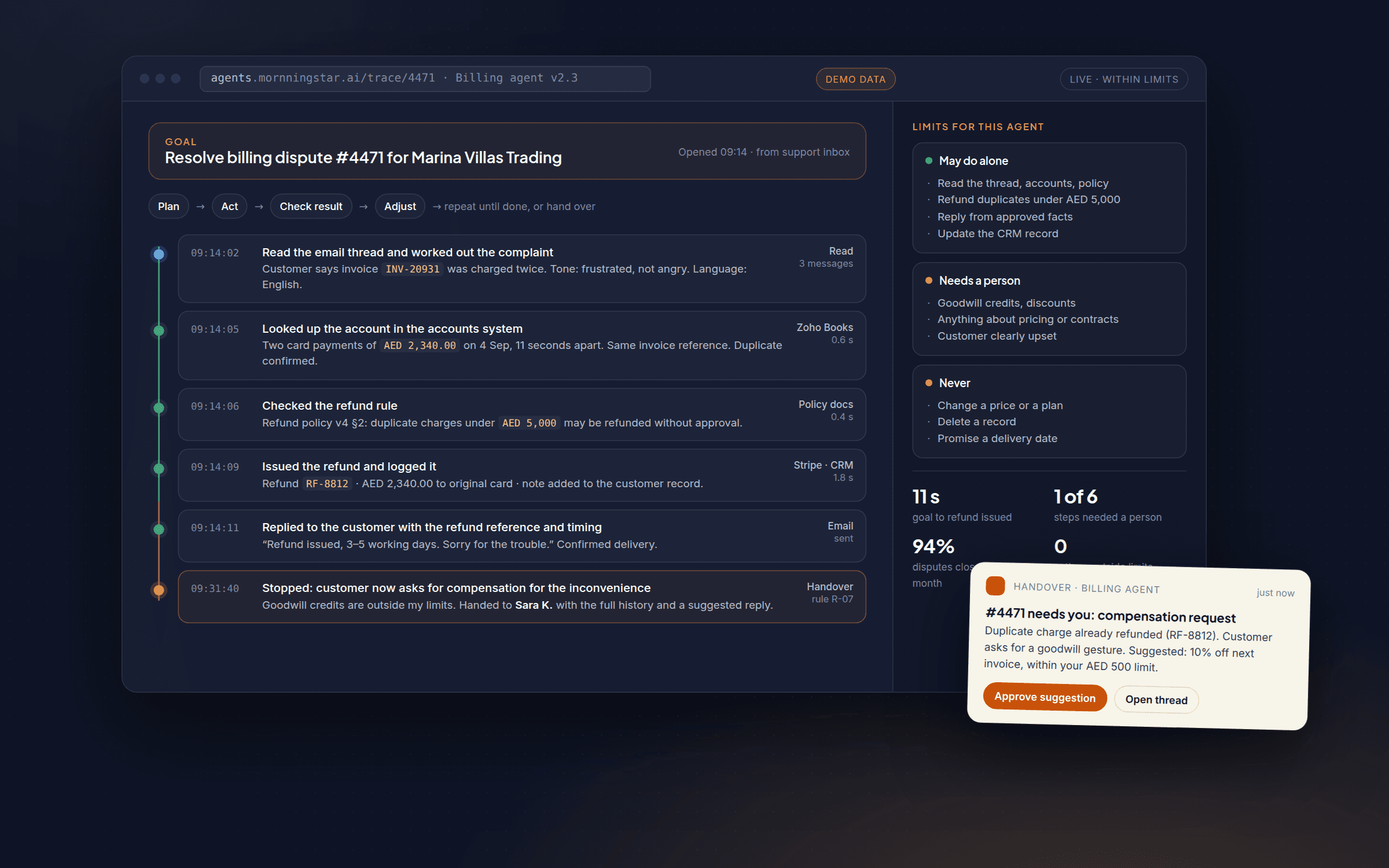
- Anything emotional. An angry or confused customer does not want a decision tree. The agent should recognise the tone and hand over quickly, not try to “resolve” it with a script.
- Ambiguous requests. A one-off situation, a custom request, a message that mixes three topics. The right move is a clean handover, not a guess dressed as an answer.
- High-stakes decisions. Large payments, legal commitments, medical judgement, anything the customer will hold you to later. The agent can gather the facts and prepare the ground; the decision should not rest with it.
- Relationship conversations. For high-value clients, a personal touch still matters. Automation should free your team’s time for those conversations, not replace them.
What setting one up involves
The exact rules are Meta’s and they change from time to time, so treat this as the shape of it and confirm the details when you plan a launch.
- You need the WhatsApp Business Platform, not the free app. The app most small businesses download is for one person replying by hand. An agent with automated logic, connections to your systems and the ability to message at scale runs on the Business Platform (the API), either connected directly through Meta or through one of Meta’s solution providers.
- Your business is verified. Meta verifies the business behind the number, which affects your display name and how many customers you can message per day. Allow time for it before a launch date.
- Replies inside the 24-hour window are free up to 1,000 a month. When a customer messages you, a 24-hour service window opens from their last message. Since 1 October 2026 Meta gives each business phone number 1,000 free delivered replies a month inside that window; beyond that, replies are charged per message. Unused allowance does not carry over. For a small business that is plenty; for a busy store it is a real line in the budget.
- Messages you start need an approved template, and cost per message. Reminders, status updates and follow-ups sent outside that window must use a pre-approved template in one of Meta’s categories (marketing, utility, authentication), charged per message at rates that vary by country and category. Utility templates sent inside an open window, which were free, are also charged from 1 October 2026. Meta moved to per-message pricing in July 2025 and changed rates again in October 2026, so get current rates from Meta or your provider before you budget.
- Ads that open a chat buy you a free week. When a customer messages you from a Click-to-WhatsApp ad and you reply within the window, Meta does not charge for your messages to that person for up to seven days. If you run Meta ads already, this is the cheapest way to start conversations.
- The integration is the predictable part. Connecting the agent to your order system, calendar or CRM, writing the conversation flows, deciding what is automated and what is escalated, and testing against real customer scenarios is where most of the project time goes, and it does not depend on Meta’s policy changes.
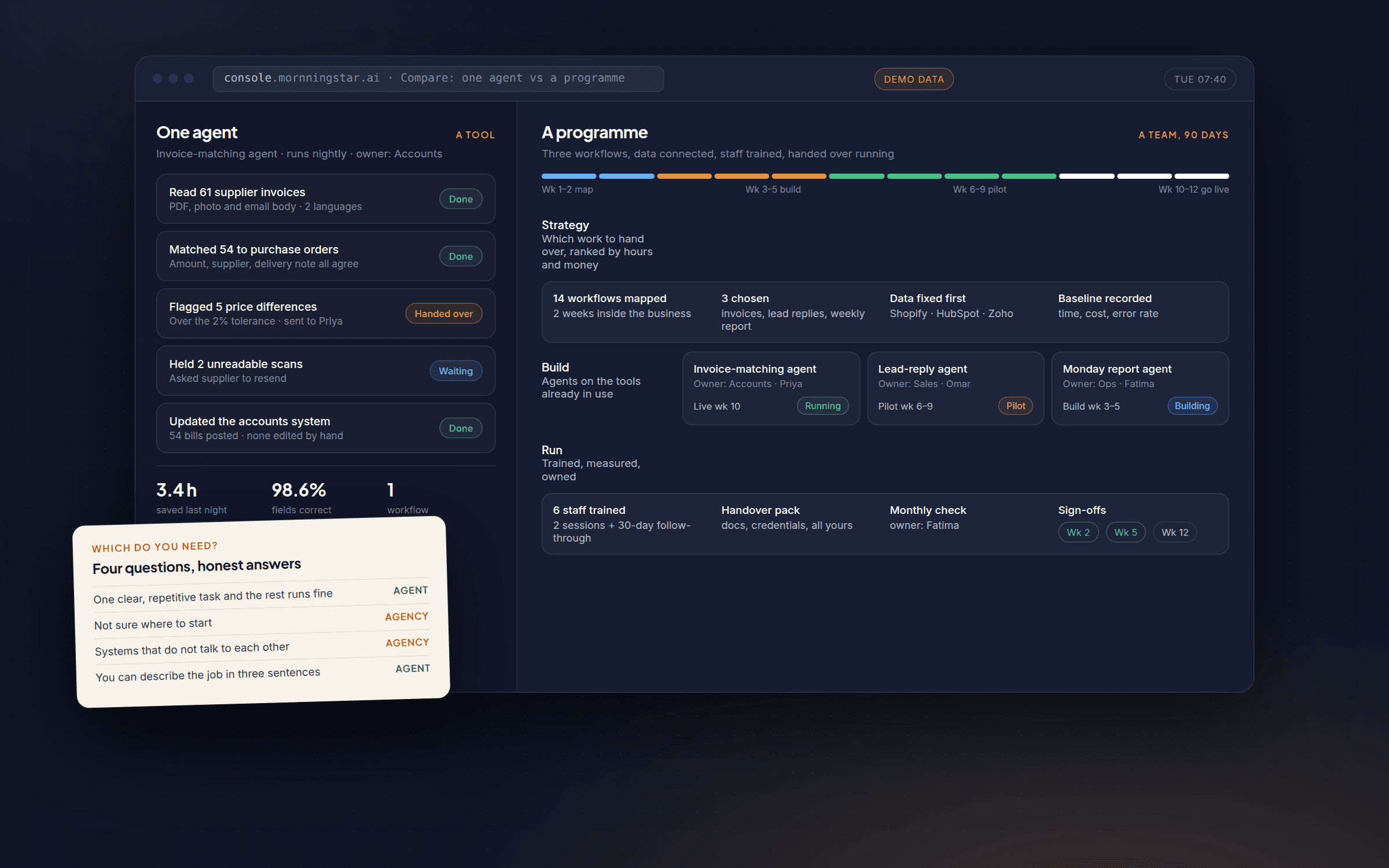
For what a full project looks like end to end, not only the WhatsApp piece, see what 90 days looks like and the 90-day programme.
Where to start
A WhatsApp agent is not a fix for customer service and it is not meant to replace your team. Done well it is a focused tool that takes the predictable share of your WhatsApp traffic (order status, bookings, first lead questions) off your team’s plate, so the conversations that reach a person are the ones that need one. If you already get a steady stream of WhatsApp messages and want to know what is realistic to automate, that is a conversation worth having before you commit to a build. Our agents service covers how we scope the split between automated and human-handled work.
Questions
Can the agent reply in Arabic and English?
Will customers know they are talking to an AI?
Can we use our existing WhatsApp number?
What does Meta charge?

Leads every 90-day programme personally. Writes these notes from the projects that shipped and the ones that did not, so you can skip the second kind.