- Agentic AI is software that takes a goal, works through the steps itself, checks the result and adjusts, stopping only when the job is done or a person is needed.
- It differs from ChatGPT-style tools, which answer once and stop, and from rule-based automation, which breaks the moment a case does not match the rule.
- It only works reliably with clean, connected data, clear limits on what it may decide alone, and a person reviewing a sample of its work.
If you have read anything about AI this year you have met the word “agentic”. It turns up in vendor pitches and LinkedIn posts, usually attached to a big claim. Strip the hype away and it describes something specific. This note explains what it is, how it differs from the AI tools you already use, and where it fits in a real business.
Agentic AI in one sentence
Agentic AI is software that takes a goal, breaks it into steps, uses tools and data to carry out those steps, and changes course based on what happens along the way, with little or no human input at each step.
The important word is steps. An ordinary AI tool answers one question and stops. An agentic system keeps going: it checks its own progress, decides what to do next, and stops only when the goal is met, it hits a wall, or it has been told to hand over to a person. Everything else in this note is detail on top of that.
How it differs from ChatGPT-style tools
Generative AI, the kind most people met first, is built to produce a response to a prompt. You ask, it writes text or code or makes an image, and it is done. It does not know what to do next unless you tell it, and it cannot act on the outside world by itself. It is a very capable typewriter.
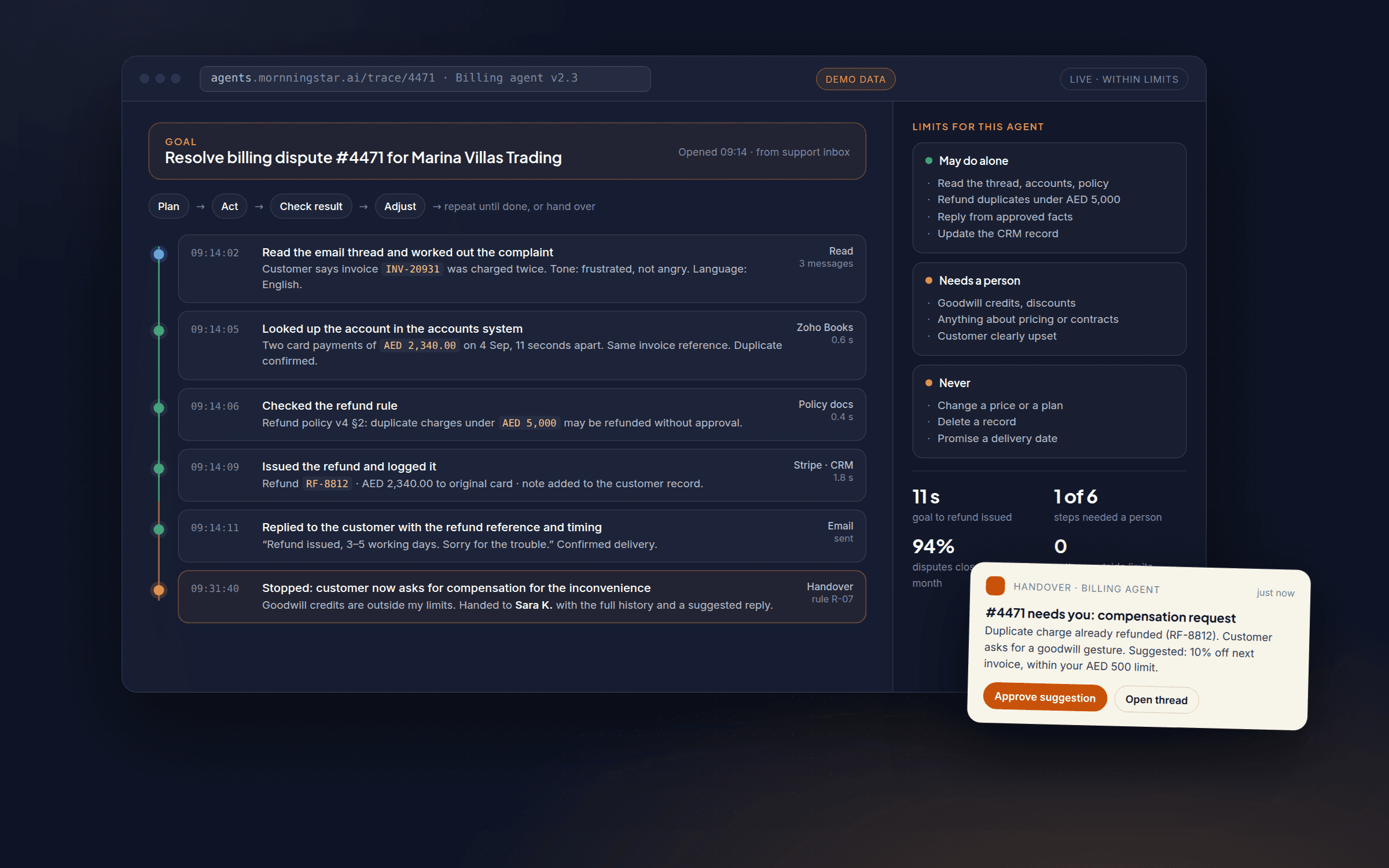
Agentic AI uses the same underlying models but wraps them in a loop: plan, act, look at the result, try again. Ask a generative tool to “draft a reply to this customer” and you get a draft. Ask an agentic system to “sort out this customer’s billing problem” and it looks up the account, works out what happened, applies the fix if it is allowed to, and escalates only when something does not add up. One responds. The other pursues a goal.
How it differs from simple automation
The other comparison people reach for is workflow automation: tools such as Zapier or Make. These are rule-based. When X happens, do Y. They are cheap and reliable, but they only handle the paths someone has mapped out in advance. If a case does not match the rule, the automation fails or does nothing.
Agentic AI is built for the cases that do not fit a rule. Instead of following a script it reads the situation in front of it, an email, a document, a half-filled form, weighs the options and picks a sensible next step even when nobody wrote a rule for that exact case. Automation is a train on rails. An agent is closer to a new employee working from a playbook, using judgement where the playbook runs out.
Three examples in a business
These are patterns we build, not descriptions of one client.
A claims-processing agent
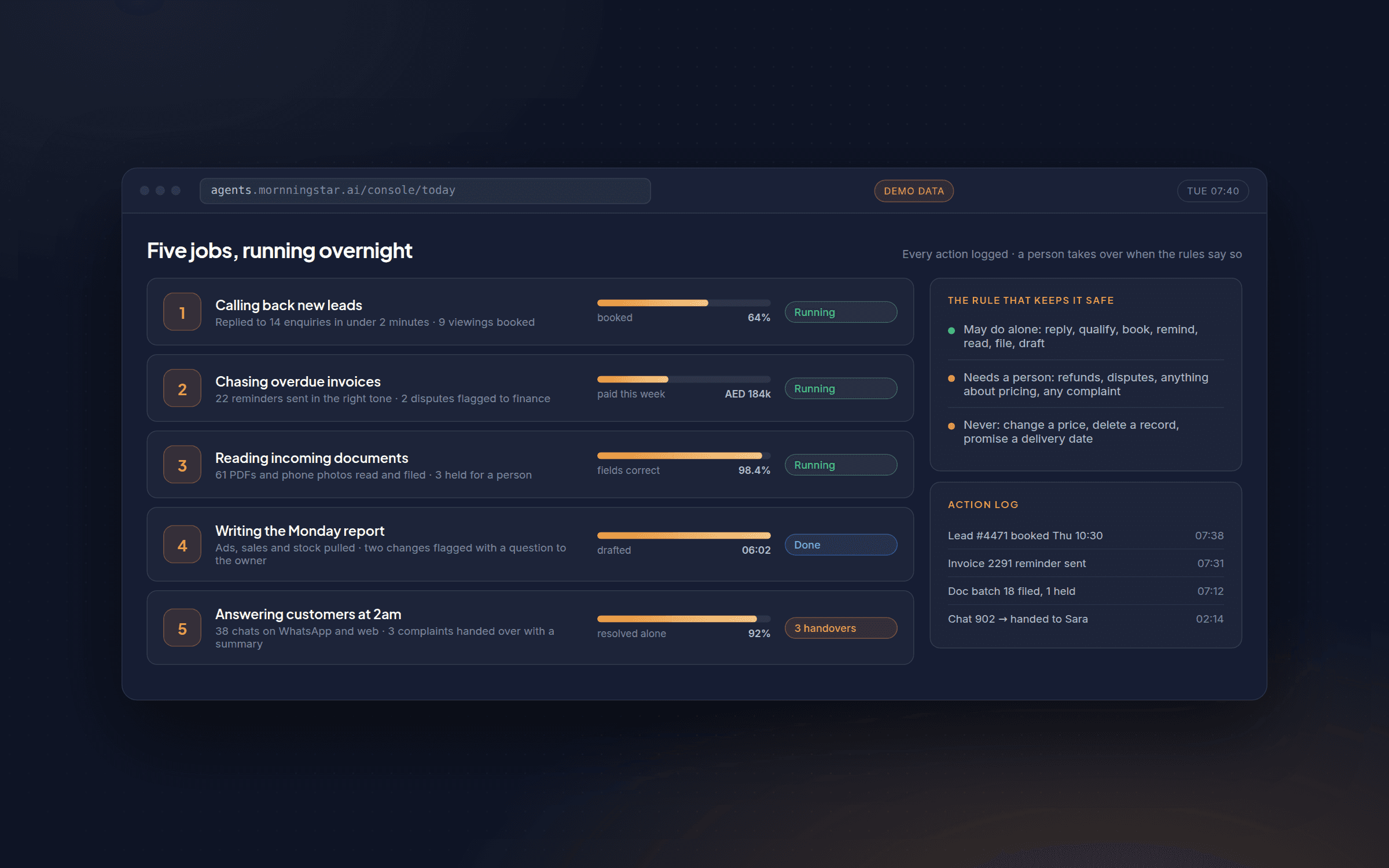
An insurance or warranty team receives claims by email, PDF and web form, each laid out differently. The agent reads each one, pulls out the details that matter, checks them against the policy rules and past history, approves the straightforward cases, and sends anything unusual to a human adjuster with a summary of what it found. The point is not to remove people. It is to remove the typing, so people spend their time on the claims that need judgement.
A sales follow-up agent
A sales team gets more enquiries than it can answer quickly. The agent watches for new leads, checks what is already known about each one, sends a relevant first reply, follows up if there is no answer, and flags the lead to a salesperson once there is real interest. It does not close deals. It keeps leads warm so the sales team is never the bottleneck.
A reporting agent
Most businesses keep their numbers in three or four systems, and someone spends part of every week pulling them into a spreadsheet. The agent connects to those systems, pulls the numbers on a schedule, checks them against the expected range, and writes a short summary that says what deserves a closer look. It is one of the five jobs an agent can take over this quarter.
What it needs to work reliably
None of this works out of the box. Three things need to be in place before an agent is given real responsibility.
- Clean, connected data. An agent is only as good as what it can see. If customer records or policy documents are scattered, out of date or locked in a system it cannot reach, it will decide on incomplete information, exactly as a new hire would. This is usually the first gap to close, and the reason we connect the data first.
- Clear limits. The agent needs to know what it may decide alone and what it must escalate: a spending limit, an approval threshold, the actions that always need a signature. Without limits, “agentic” just means “makes mistakes faster”.
- A person checking a sample. Especially in the first weeks, someone should review a slice of what the agent did, not only the cases it flagged itself. That is how you catch a pattern of errors early and earn the confidence to widen what the agent is trusted with.
The model is the easy part. Most of the work in a reliable agent is the plumbing around it.
Is your business ready for it?
Agentic AI pays off where there is a repeatable process, a clear goal, and enough volume that doing it by hand is costing real money. It does not pay off on rare tasks, on work that is pure judgement, or where the underlying data is not yet in usable shape. If you are not sure, map the process before you build the agent.
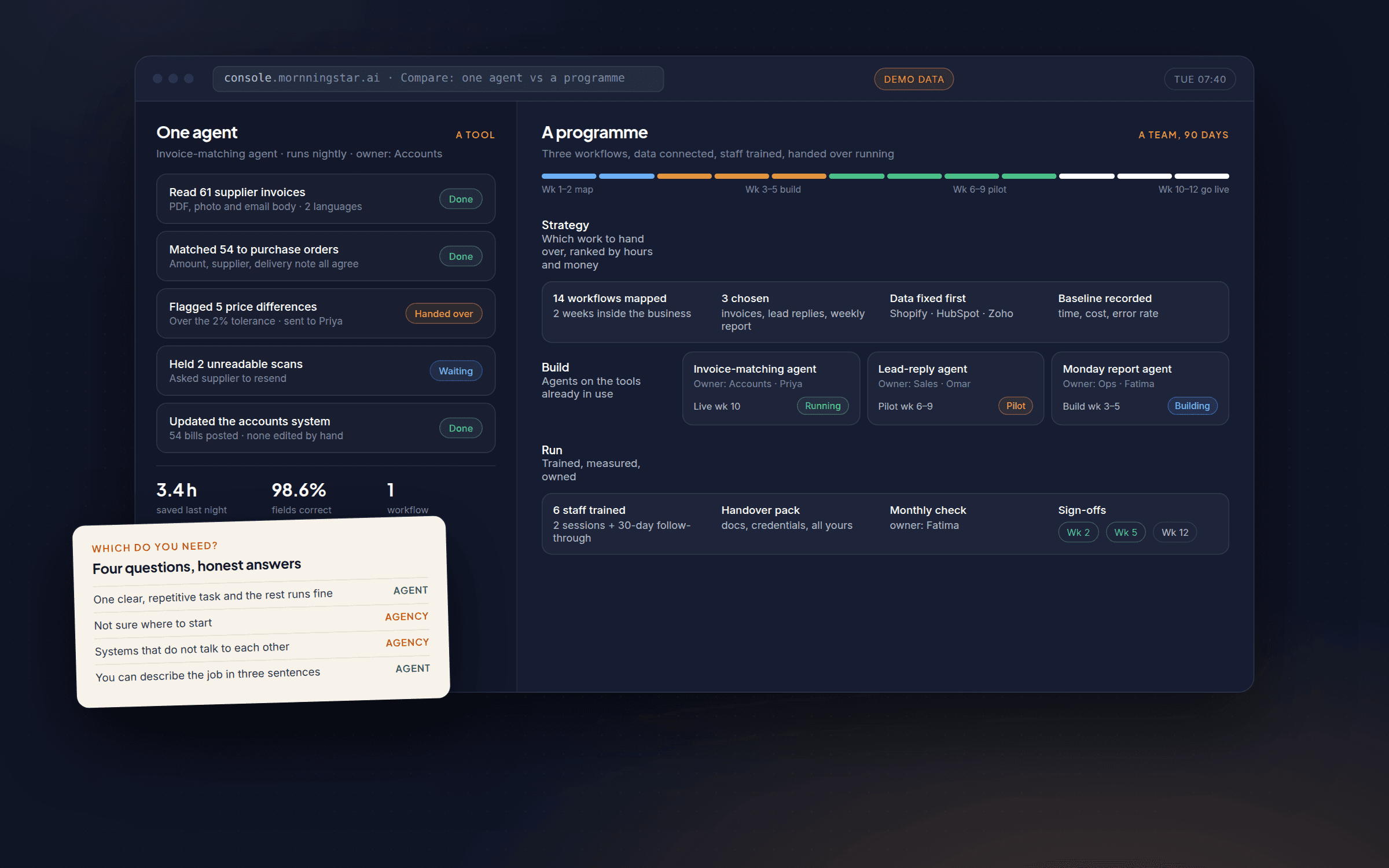
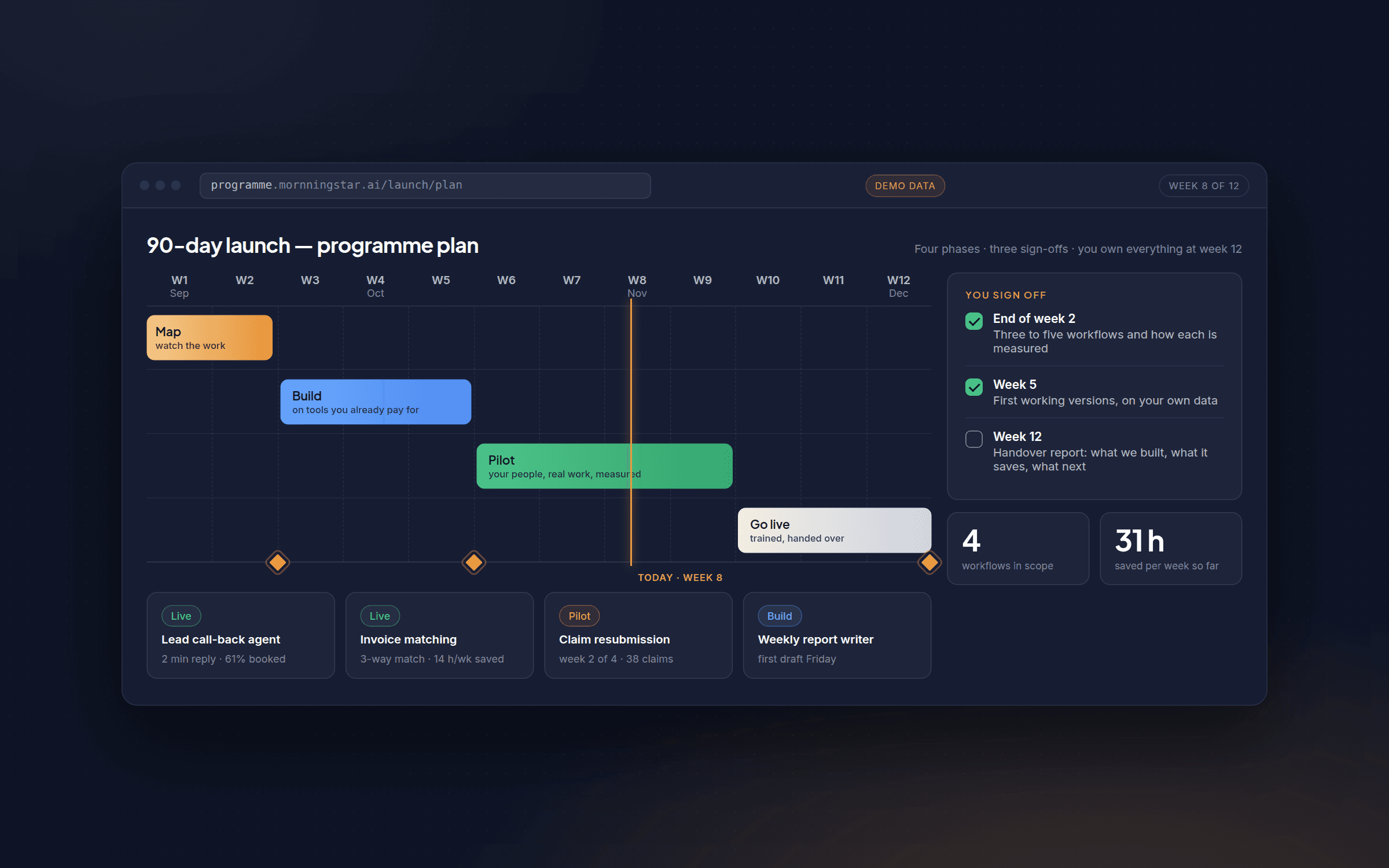
It is also worth being clear about who should build it. A single low-code agent tool is a different purchase from a team that scopes the data, the limits and the review process around it. Our note on AI agent versus AI agency draws that line, and the case studies show what real projects look like.
Questions
Is agentic AI the same thing as an AI agent?
Does agentic AI replace employees?
Do we need a large IT team to use it?
How long before an agent is trusted to run on its own?

Leads every 90-day programme personally. Writes these notes from the projects that shipped and the ones that did not, so you can skip the second kind.